The Internet of Things (IoT) has transformed the way we live and work—connecting billions of devices across homes, industries, and cities. But powering this connected ecosystem requires a communication technology that is efficient, reliable, and scalable. Enter Bluetooth Low Energy (BLE), a wireless standard that has quietly become the backbone of modern IoT solutions.
In 2025, BLE is no longer an optional feature—it’s a revolutionary force driving IoT innovation. Here’s why.
1. Energy Efficiency at Scale
Traditional wireless technologies like Wi-Fi or Classic Bluetooth drain battery life quickly. For IoT, where devices often run on small coin-cell batteries, power efficiency is critical.
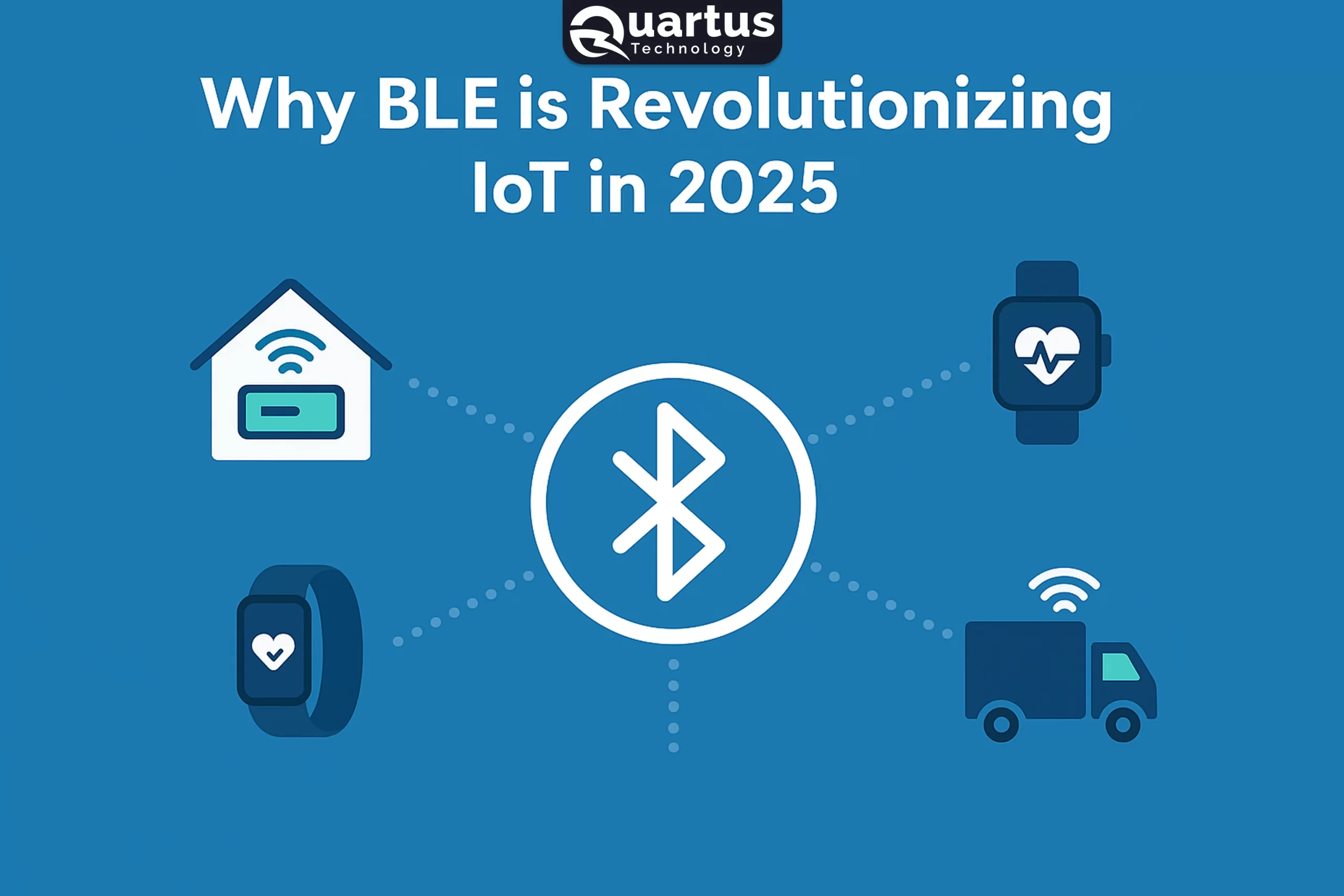
BLE is designed to use minimal power while transmitting data in short bursts, making it possible for IoT devices like:
- Smart sensors
- Fitness trackers
- Wearables
- Asset trackers
…to run for months or years without frequent recharging or replacements. This is why BLE is the preferred choice for sustainable IoT ecosystems.
2. Extended Range and Coverage
With Bluetooth 5.3 and newer versions in 2025, BLE offers:
- Range up to 400 meters in open space
- Reliable connections even in dense urban environments
- Enhanced coexistence with Wi-Fi and 5G
This extended range makes BLE a perfect fit for industrial IoT, smart cities, and large-scale deployments like warehouses, hospitals, and retail spaces.
3. Cost-Effective Connectivity
For businesses, one of the biggest challenges of IoT adoption is cost. BLE’s low hardware and operational costs make it ideal for affordable mass deployments.
- Manufacturers can integrate BLE into devices at lower costs.
- Businesses can deploy BLE-based IoT without heavy infrastructure.
- Developers can leverage BLE APIs to build mobile and web apps that communicate directly with BLE devices.
This affordability factor is fueling the mass adoption of IoT worldwide.
4. Proximity & Location Services
BLE’s beacon technology has unlocked new possibilities for location-based IoT applications.
- Retail IoT: Beacons send personalized offers as customers move through stores.
- Healthcare IoT: Hospitals use BLE tags for patient tracking and asset management.
- Logistics IoT: Businesses track shipments in real time with BLE-enabled sensors.
By combining proximity detection with IoT, BLE enables context-aware applications that deliver real-time insights.
5. Scalability for Smart Ecosystems
IoT is all about multiple devices working together seamlessly. BLE supports:
- Mesh networking, allowing thousands of devices to connect reliably.
- Multi-device communication, ensuring smooth operation in complex IoT setups.
- Interoperability, making BLE devices compatible with smartphones, tablets, and web applications.
This scalability makes BLE perfect for smart homes, industrial IoT, and connected healthcare systems.
6. Security & Reliability
In 2025, cybersecurity in IoT is more important than ever. BLE offers:
- End-to-end encryption for secure data transfer
- Fast, reliable pairing
- Resistance to interference from other wireless technologies
This ensures that sensitive data from healthcare, POS systems, and enterprise IoT devices remains protected.
The Future of BLE in IoT
As IoT devices continue to grow—projected to reach 30 billion+ connected devices by 2030—BLE will remain a cornerstone technology. Its ability to balance low energy use, cost efficiency, and scalability makes it the ideal connectivity standard for the next wave of IoT innovations.
From smart wearables to connected cities, BLE is the invisible force making IoT more sustainable, accessible, and intelligent.