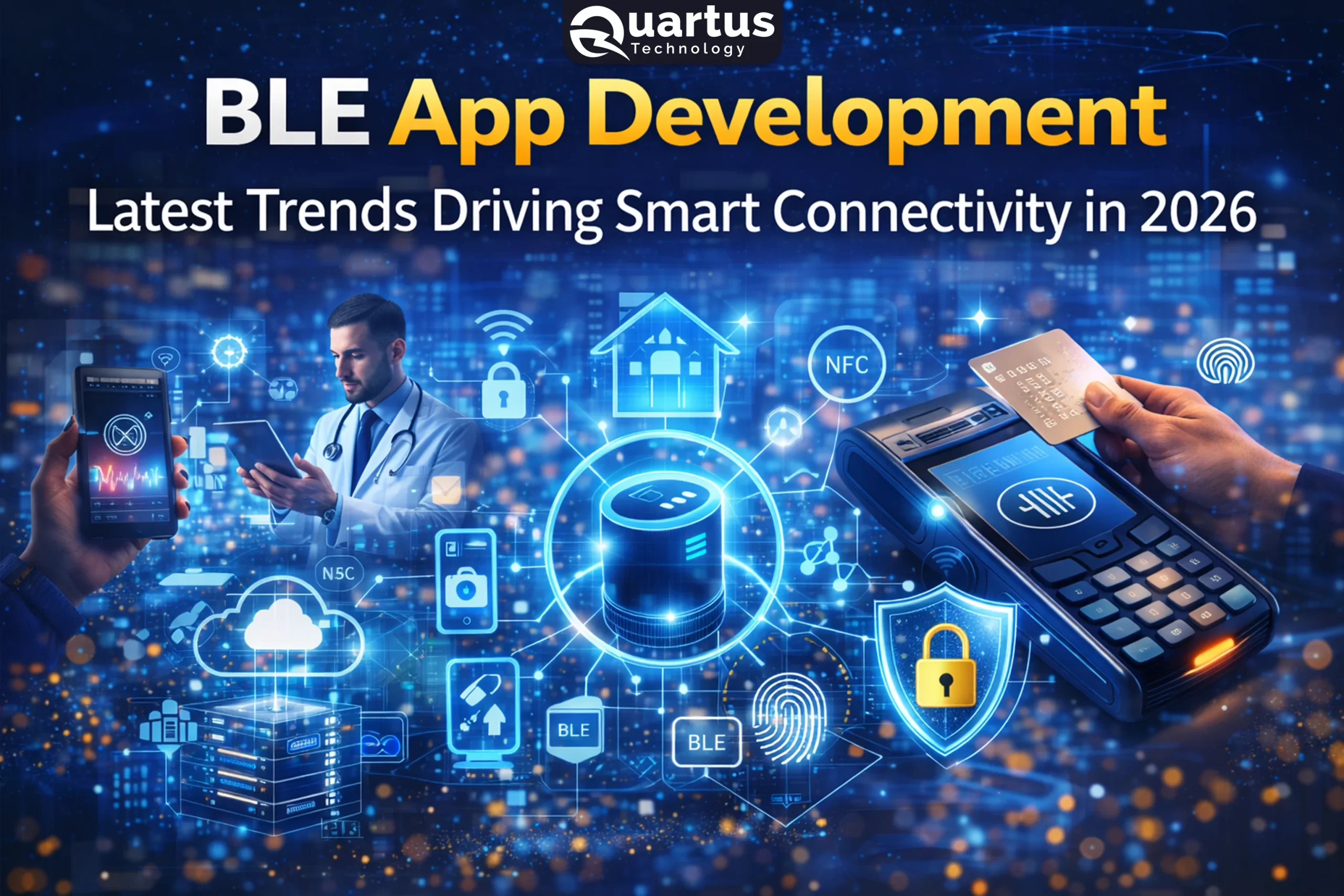
Bluetooth Low Energy (BLE) technology has become the backbone of modern smart connectivity. From IoT devices and wearable technology to healthcare, retail, automotive, and smart homes, BLE app development is enabling low-power, high-performance, and real-time communication across industries.
As businesses accelerate digital transformation, the demand for custom BLE app developers continues to grow rapidly. In this blog, we explore the latest trends in BLE app development and how they are shaping the future of connected ecosystems.
1. BLE + IoT: Powering the Connected World
BLE plays a critical role in IoT ecosystems due to its low power consumption and reliable connectivity.
Key Use Cases:
- Smart home devices (locks, lighting, thermostats)
- Industrial IoT sensors
- Asset tracking solutions
- Smart retail shelves
- Environmental monitoring systems
Modern BLE apps now integrate seamlessly with cloud platforms, enabling real-time data synchronization and remote device management.
2. BLE 5.x & Enhanced Performance
The latest Bluetooth versions (BLE 5.x and above) bring major improvements:
✔ Extended range (up to 4x)
✔ Faster data transfer speeds
✔ Improved broadcasting capacity
✔ Enhanced location accuracy
These upgrades enable developers to build high-performance BLE applications suitable for enterprise-scale deployments.
3. BLE in Healthcare & Medical Devices
Healthcare is one of the fastest-growing sectors for BLE app development.
BLE-powered solutions include:
- Remote patient monitoring
- Wearable health trackers
- Smart glucose meters
- Heart rate & fitness monitors
- Medical device connectivity apps
BLE apps ensure secure, real-time data transmission while maintaining battery efficiency — a critical requirement in medical environments.
4. AI & Data Analytics Integration
Modern BLE applications are no longer just about connectivity — they are intelligent systems.
Developers are now integrating:
- AI-based predictive analytics
- Machine learning algorithms
- Real-time usage insights
- Automated alerts and recommendations
This allows businesses to transform raw BLE data into actionable insights.
5. Cross-Platform BLE App Development
Businesses demand BLE apps that work across:
- Android
- iOS
- Windows
- Web dashboards
Using frameworks like Flutter, React Native, and native SDKs, BLE app developers create scalable, cross-platform solutions with consistent performance and UX.
6. BLE Security & Data Privacy Enhancements
With growing connectivity comes higher security expectations.
Latest BLE app development trends focus on:
- End-to-end encryption
- Secure pairing & bonding
- Tokenized data exchange
- Role-based device access
- Compliance with GDPR, HIPAA, and industry standards
Security-first BLE apps build trust and reliability.
7. BLE + NFC & Contactless Experiences
BLE is increasingly combined with NFC technology for:
- Smart payments
- Digital access control
- Proximity-based authentication
- Retail engagement experiences
This hybrid approach enables seamless and secure contactless interactions.
8. BLE for Retail & POS Systems
Retail and POS environments are rapidly adopting BLE technology.
Applications include:
- Smart POS device connectivity
- Beacon-based customer engagement
- Inventory tracking
- Queue management systems
- Personalized in-store promotions
BLE apps enhance customer experience and operational efficiency.
9. Edge Computing & Offline BLE Functionality
To reduce latency and dependency on cloud connectivity, BLE apps now leverage:
- Edge computing
- Local data processing
- Offline-first functionality
This is especially useful in industrial, healthcare, and remote environments.
10. Custom BLE App Development: The Competitive Advantage
Off-the-shelf BLE solutions often fail to meet unique business requirements. Custom BLE app development offers:
✔ Tailored device integration
✔ Optimized performance
✔ Industry-specific workflows
✔ Scalability & flexibility
✔ Long-term cost efficiency
Businesses investing in custom BLE solutions gain a strong technological edge.